 Ella Verbs
How to conjugate Delatar in Spanish
To betray, to give away Regular AR Verb
At a glance: Delatar (to betray, to give away) is a regular -AR verb in Spanish. In the present tense: delato, delatas, delata, delatamos, delatáis, delatan. Because it is fully regular, its endings apply directly to hundreds of other -AR verbs.
Table of Contents
- Introduction
- Indicative tenses of Delatar
- Delatar in the Indicative Present
- Delatar in the Indicative Preterite
- Delatar in the Indicative Imperfect
- Delatar in the Indicative Present Continuous
- Delatar in the Indicative Informal Future
- Delatar in the Indicative Future
- Delatar in the Indicative Conditional
- Delatar in the Indicative Present Perfect
- Delatar in the Indicative Past Perfect
- Delatar in the Indicative Future Perfect
- Delatar in the Indicative Conditional Perfect
- Subjunctive tenses of Delatar
- Imperative tenses of Delatar
- Frequently asked questions
- Downloadable cheat sheet (PDF)
- Practice Delatar conjugations (free mobile app)
Introduction
Delatar is the Spanish verb for "to betray, to give away". It is a regular AR verb. Read on below to see how it is conjugated in the 18 major Spanish tenses!
Similar verbs to delatar include: regalar.
| Item | Spanish | English |
|---|---|---|
| Infinitive | delatar | to betray, to give away |
| Past participle | delatado | betrayed |
| Gerund | delatando | betraying |
🇪🇸 New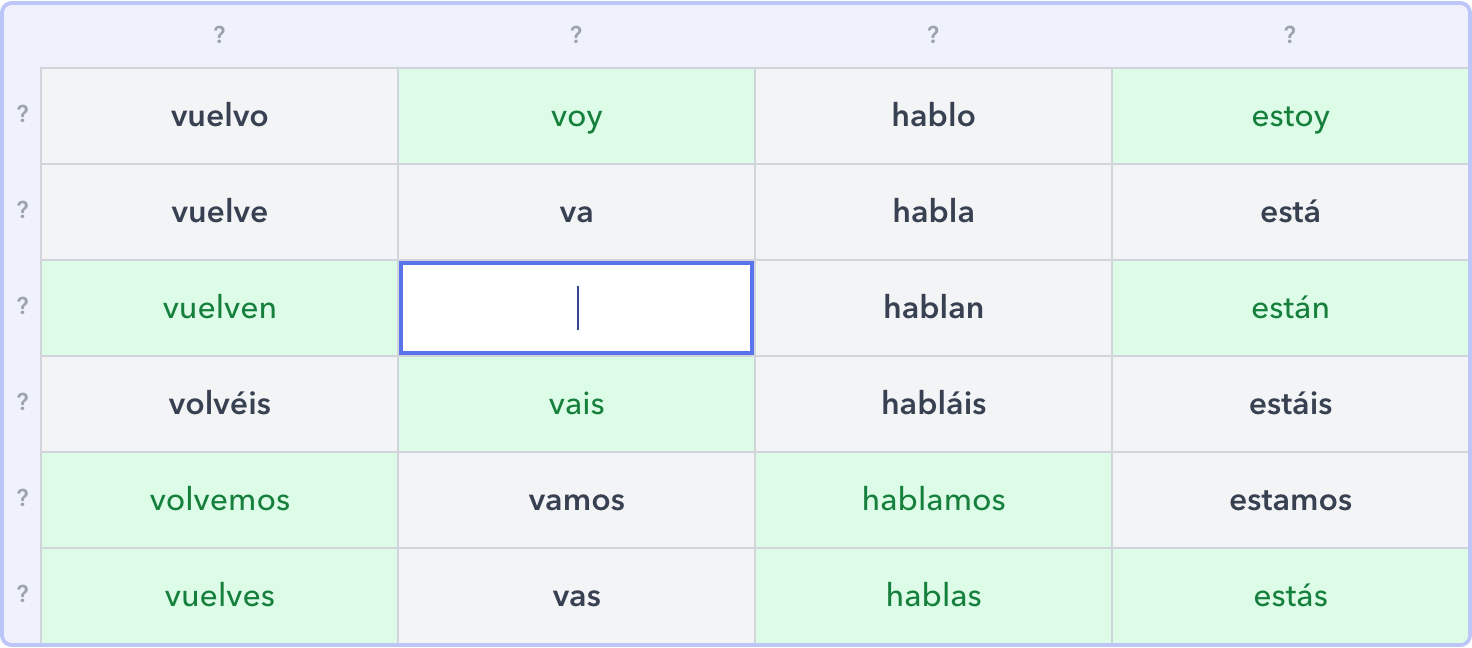
Practice conjugation in a way that makes you think, not just memorize. Our Spanish Verb Sudoku has a new puzzle every day, plus free printable PDF worksheets with answer keys.
It includes the most detailed verb tables (with full English translation) for Delatar and 2,300+ other verbs.
Play nowIndicative Tenses of Delatar
Delatar in the Indicative Present
The Indicative Present of delatar is used to talk about situations, events or thoughts that are happening now or in the near future. It is also used to talk about facts and truths. For example, "delato", meaning "I betray".
In Spanish, the Indicative Present is known as "El Presente".
| Pronoun | Spanish | English |
|---|---|---|
| Yo | delato | I betray |
| Tú | delatas | you betray |
| Ella / Él / Usted | delata | s/he betrays |
| Nosotras / Nosotros | delatamos | we betray |
| Vosotras / Vosotros | delatáis | you (plural) betray |
| Ellas / Ellos / Ustedes | delatan | they betray |
Or use our app:


Back to top
Delatar in the Indicative Preterite
The Indicative Preterite of delatar is used to talk about actions completed in the past, at a specific point in time. For example, "delaté", meaning "I betrayed".
In Spanish, the Indicative Preterite is known as "El Pretérito Indefinido".
| Pronoun | Spanish | English |
|---|---|---|
| Yo | delaté | I betrayed |
| Tú | delataste | you betrayed |
| Ella / Él / Usted | delató | s/he betrayed |
| Nosotras / Nosotros | delatamos | we betrayed |
| Vosotras / Vosotros | delatasteis | you (plural) betrayed |
| Ellas / Ellos / Ustedes | delataron | they betrayed |
Or use our app:
Back to top
Delatar in the Indicative Imperfect
The Indicative Imperfect of delatar is used to describe regular and repeated actions that happened in the past and descriptions of things you used to do. For example, "delataba", meaning "I used to betray".
In Spanish, the Indicative Imperfect is known as "El Pretérito Imperfecto".
| Pronoun | Spanish | English |
|---|---|---|
| Yo | delataba | I used to betray |
| Tú | delatabas | you used to betray |
| Ella / Él / Usted | delataba | s/he used to betray |
| Nosotras / Nosotros | delatábamos | we used to betray |
| Vosotras / Vosotros | delatabais | you (plural) used to betray |
| Ellas / Ellos / Ustedes | delataban | they used to betray |
Or use our app:
Back to top
Delatar in the Indicative Present Continuous
The Indicative Present Continuous of delatar is used to talk about something that is happening continuously or right now. For example, "estoy delatando", meaning "I am betraying".
In Spanish, the Indicative Present Continuous is known as "El Presente Progresivo".
| Pronoun | Spanish | English |
|---|---|---|
| Yo | estoy delatando | I am betraying |
| Tú | estás delatando | you are betraying |
| Ella / Él / Usted | está delatando | s/he is betraying |
| Nosotras / Nosotros | estamos delatando | we are betraying |
| Vosotras / Vosotros | estáis delatando | you (plural) are betraying |
| Ellas / Ellos / Ustedes | están delatando | they are betraying |
Or use our app:
Back to top
Delatar in the Indicative Informal Future
The Indicative Informal Future of delatar is used to talk about something that will happen in the future, especially in the near future. For example, "voy a delatar", meaning "I am going to betray".
In Spanish, the Indicative Informal Future is known as "El Futuro Próximo".
| Pronoun | Spanish | English |
|---|---|---|
| Yo | voy a delatar | I am going to betray |
| Tú | vas a delatar | you are going to betray |
| Ella / Él / Usted | va a delatar | s/he is going to betray |
| Nosotras / Nosotros | vamos a delatar | we are going to betray |
| Vosotras / Vosotros | vais a delatar | you (plural) are going to betray |
| Ellas / Ellos / Ustedes | van a delatar | they are going to betray |
Or use our app:
Back to top
Delatar in the Indicative Future
The Indicative Future of delatar is used to talk about something that will happen in the future. For example, "delataré", meaning "I will betray".
In Spanish, the Indicative Future is known as "El Futuro Simple".
| Pronoun | Spanish | English |
|---|---|---|
| Yo | delataré | I will betray |
| Tú | delatarás | you will betray |
| Ella / Él / Usted | delatará | s/he will betray |
| Nosotras / Nosotros | delataremos | we will betray |
| Vosotras / Vosotros | delataréis | you (plural) will betray |
| Ellas / Ellos / Ustedes | delatarán | they will betray |
Or use our app:
Back to top
Delatar in the Indicative Conditional
The Indicative Conditional of delatar is used to talk about something that may happen in the future, hypothesis and probabilities. For example, "delataría", meaning "I would betray".
In Spanish, the Indicative Conditional is known as "El Condicional Simple".
| Pronoun | Spanish | English |
|---|---|---|
| Yo | delataría | I would betray |
| Tú | delatarías | you would betray |
| Ella / Él / Usted | delataría | s/he would betray |
| Nosotras / Nosotros | delataríamos | we would betray |
| Vosotras / Vosotros | delataríais | you (plural) would betray |
| Ellas / Ellos / Ustedes | delatarían | they would betray |
Or use our app:
Back to top
Delatar in the Indicative Present Perfect
The Indicative Present Perfect of delatar is used to describe actions that started recently (in the past) and are still happening now or things that have been done recently. For example, "he delatado", meaning "I have betrayed".
In Spanish, the Indicative Present Perfect is known as "El Pretérito Perfecto".
| Pronoun | Spanish | English |
|---|---|---|
| Yo | he delatado | I have betrayed |
| Tú | has delatado | you have betrayed |
| Ella / Él / Usted | ha delatado | s/he has betrayed |
| Nosotras / Nosotros | hemos delatado | we have betrayed |
| Vosotras / Vosotros | habéis delatado | you (plural) have betrayed |
| Ellas / Ellos / Ustedes | han delatado | they have betrayed |
Or use our app:
Back to top
Delatar in the Indicative Past Perfect
The Indicative Past Perfect of delatar is used to talk about actions that happened before another action in the past. For example, "había delatado", meaning "I had betrayed".
In Spanish, the Indicative Past Perfect is known as "El Pretérito Pluscuamperfecto".
| Pronoun | Spanish | English |
|---|---|---|
| Yo | había delatado | I had betrayed |
| Tú | habías delatado | you had betrayed |
| Ella / Él / Usted | había delatado | s/he had betrayed |
| Nosotras / Nosotros | habíamos delatado | we had betrayed |
| Vosotras / Vosotros | habíais delatado | you (plural) had betrayed |
| Ellas / Ellos / Ustedes | habían delatado | they had betrayed |
Or use our app:
Back to top
Delatar in the Indicative Future Perfect
The Indicative Future Perfect of delatar is used to talk about something that will have happened in the future after something else has already happened. For example, "habré delatado", meaning "I will have betrayed".
In Spanish, the Indicative Future Perfect is known as "El Futuro Perfecto".
| Pronoun | Spanish | English |
|---|---|---|
| Yo | habré delatado | I will have betrayed |
| Tú | habrás delatado | you will have betrayed |
| Ella / Él / Usted | habrá delatado | s/he will have betrayed |
| Nosotras / Nosotros | habremos delatado | we will have betrayed |
| Vosotras / Vosotros | habréis delatado | you (plural) will have betrayed |
| Ellas / Ellos / Ustedes | habrán delatado | they will have betrayed |
Or use our app:
Back to top
Delatar in the Indicative Conditional Perfect
The Indicative Conditional Perfect of delatar is used to talk about something that would have happened in the past but didn’t due to another action. For example, "habría delatado", meaning "I would have betrayed".
In Spanish, the Indicative Conditional Perfect is known as "El Condicional Perfecto".
| Pronoun | Spanish | English |
|---|---|---|
| Yo | habría delatado | I would have betrayed |
| Tú | habrías delatado | you would have betrayed |
| Ella / Él / Usted | habría delatado | s/he would have betrayed |
| Nosotras / Nosotros | habríamos delatado | we would have betrayed |
| Vosotras / Vosotros | habríais delatado | you (plural) would have betrayed |
| Ellas / Ellos / Ustedes | habrían delatado | they would have betrayed |
Or use our app:
Back to top
🇪🇸 New
Practice conjugation in a way that makes you think, not just memorize. Our Spanish Verb Sudoku has a new puzzle every day, plus free printable PDF worksheets with answer keys.
It includes the most detailed verb tables (with full English translation) for Delatar and 2,300+ other verbs.
Play nowSubjunctive Tenses of Delatar
Delatar in the Subjunctive Present
The Subjunctive Present is used to talk about situations of uncertainty, or emotions such as wishes, desires and hopes. It differs from the indicative mood due to the uncertainty of the events which are being spoken about. For example, "delate", meaning "I betray".
In Spanish, the Subjunctive Present is known as "El Presente de Subjuntivo".
| Pronoun | Spanish | English |
|---|---|---|
| Yo | delate | I betray |
| Tú | delates | you betray |
| Ella / Él / Usted | delate | s/he betrays |
| Nosotras / Nosotros | delatemos | we betray |
| Vosotras / Vosotros | delatéis | you (plural) betray |
| Ellas / Ellos / Ustedes | delaten | they betray |
Or use our app:
Back to top
Delatar in the Subjunctive Imperfect
The Subjunctive Imperfect is used to speak about unlikely or uncertain events in the past or to cast an opinion (emotional) about something that happened in the past. For example, "delatara", meaning "I betrayed".
In Spanish, the Subjunctive Imperfect is known as "El Imperfecto Subjuntivo".
| Pronoun | Spanish | English |
|---|---|---|
| Yo | delatara | I betrayed |
| Tú | delataras | you betrayed |
| Ella / Él / Usted | delatara | s/he betrayed |
| Nosotras / Nosotros | delatáramos | we betrayed |
| Vosotras / Vosotros | delatarais | you (plural) betrayed |
| Ellas / Ellos / Ustedes | delataran | they betrayed |
Or use our app:
Back to top
Delatar in the Subjunctive Future
The Subjunctive Future is used to speak about hypothetical situations, and actions/events that may happen in the future. For example, "delatare", meaning "I will betray".
In Spanish, the Subjunctive Future is known as "El Futuro de Subjuntivo".
| Pronoun | Spanish | English |
|---|---|---|
| Yo | delatare | I will betray |
| Tú | delatares | you will betray |
| Ella / Él / Usted | delatare | s/he will betray |
| Nosotras / Nosotros | delatáremos | we will betray |
| Vosotras / Vosotros | delatareis | you (plural) will betray |
| Ellas / Ellos / Ustedes | delataren | they will betray |
Or use our app:
Back to top
Delatar in the Subjunctive Present Perfect
The Subjunctive Present Perfect is used to describe past actions or events that are still connected to the present day and to speak about an action that will have happened by a certain time in the future. For example, "haya delatado", meaning "I have betrayed".
In Spanish, the Subjunctive Present Perfect is known as "El Pretérito Perfecto de Subjuntivo".
| Pronoun | Spanish | English |
|---|---|---|
| Yo | haya delatado | I have betrayed |
| Tú | hayas delatado | you have betrayed |
| Ella / Él / Usted | haya delatado | s/he has betrayed |
| Nosotras / Nosotros | hayamos delatado | we have betrayed |
| Vosotras / Vosotros | hayáis delatado | you (plural) have betrayed |
| Ellas / Ellos / Ustedes | hayan delatado | they have betrayed |
Or use our app:
Back to top
Delatar in the Subjunctive Past Perfect
The Subjunctive Past Perfect is used to speak about hypothetical situations, and actions/events that occurred before other actions/events in the past. For example, "hubiera delatado", meaning "I had betrayed".
In Spanish, the Subjunctive Past Perfect is known as "El Pretérito Pluscuamperfecto de Subjuntivo".
| Pronoun | Spanish | English |
|---|---|---|
| Yo | hubiera delatado | I had betrayed |
| Tú | hubieras delatado | you had betrayed |
| Ella / Él / Usted | hubiera delatado | s/he had betrayed |
| Nosotras / Nosotros | hubiéramos delatado | we had betrayed |
| Vosotras / Vosotros | hubierais delatado | you (plural) had betrayed |
| Ellas / Ellos / Ustedes | hubieran delatado | they had betrayed |
Or use our app:
Back to top
Delatar in the Subjunctive Future Perfect
The Subjunctive Future Perfect is used to speak about something that will have happened if a hypothetical situations occurs in the future. For example, "hubiere delatado", meaning "I will have betrayed".
In Spanish, the Subjunctive Future Perfect is known as "El Futuro Perfecto de Subjuntivo".
| Pronoun | Spanish | English |
|---|---|---|
| Yo | hubiere delatado | I will have betrayed |
| Tú | hubieres delatado | you will have betrayed |
| Ella / Él / Usted | hubiere delatado | s/he will have betrayed |
| Nosotras / Nosotros | hubiéremos delatado | we will have betrayed |
| Vosotras / Vosotros | hubiereis delatado | you (plural) will have betrayed |
| Ellas / Ellos / Ustedes | hubieren delatado | they will have betrayed |
Or use our app:
Back to top
🇪🇸 New
Practice conjugation in a way that makes you think, not just memorize. Our Spanish Verb Sudoku has a new puzzle every day, plus free printable PDF worksheets with answer keys.
It includes the most detailed verb tables (with full English translation) for Delatar and 2,300+ other verbs.
Play nowImperative Tenses of Delatar
Delatar in the Imperative Affirmative
The Imperative Affirmative is used to give orders and commands, to tell someone to do something. For example, "delate", meaning "(to you formal) betray!".
In Spanish, the Imperative Affirmative is known as "El Imperativo Afirmativo".
| Pronoun | Spanish | English |
|---|---|---|
| Yo | - | - |
| Tú | delata | (to you) betray! |
| Ella / Él / Usted | delate | (to you formal) betray! |
| Nosotras / Nosotros | delatemos | let's betray! |
| Vosotras / Vosotros | delatad | (to you plural) betray! |
| Ellas / Ellos / Ustedes | delaten | (to you plural formal) betray! |
Or use our app:
Back to top
Delatar in the Imperative Negative
The Imperative Negative is used to give orders and commands, telling someone not to do something. For example, "no delate", meaning "(to you formal) don't betray!".
In Spanish, the Imperative Negative is known as "El Imperativo Negativo".
| Pronoun | Spanish | English |
|---|---|---|
| Yo | - | - |
| Tú | no delates | (to you) don't betray! |
| Ella / Él / Usted | no delate | (to you formal) don't betray! |
| Nosotras / Nosotros | no delatemos | let's not betray! |
| Vosotras / Vosotros | no delatéis | (to you plural) don't betray! |
| Ellas / Ellos / Ustedes | no delaten | (to you plural formal) don't betray! |
Or use our app:
Back to top
Frequently asked questions about Delatar
Is delatar a regular or irregular verb?
Delatar is a fully regular -AR verb. It follows the standard -AR conjugation pattern in every tense and mood without any stem changes, spelling changes, or irregular forms. This makes it a model verb for learning the -AR conjugation system.
How do you conjugate delatar in the present tense (presente)?
In the present tense (presente), delatar is conjugated as: yo delato, tú delatas, él/ella/usted delata, nosotros delatamos, vosotros delatáis, ellos/ellas/ustedes delatan. The present tense is used To talk about situations, events or thoughts that are happening now or in the near future. It is also used to talk about facts and truths.
How do you conjugate delatar in the preterite (pretérito indefinido)?
In the preterite (pretérito indefinido), delatar is conjugated as: yo delaté, tú delataste, él/ella/usted delató, nosotros delatamos, vosotros delatasteis, ellos/ellas/ustedes delataron. The preterite is used To talk about actions completed in the past, at a specific point in time.
How do you conjugate delatar in the imperfect (pretérito imperfecto)?
In the imperfect (pretérito imperfecto), delatar is conjugated as: yo delataba, tú delatabas, él/ella/usted delataba, nosotros delatábamos, vosotros delatabais, ellos/ellas/ustedes delataban. The imperfect is used To describe regular and repeated actions that happened in the past and descriptions of things you used to do.
How do you conjugate delatar in the future tense (futuro simple)?
In the future tense (futuro simple), delatar is conjugated as: yo delataré, tú delatarás, él/ella/usted delatará, nosotros delataremos, vosotros delataréis, ellos/ellas/ustedes delatarán. The future tense is used To talk about something that will happen in the future.
How do you conjugate delatar in the present subjunctive (subjuntivo presente)?
In the present subjunctive (subjuntivo presente), delatar is conjugated as: yo delate, tú delates, él/ella/usted delate, nosotros delatemos, vosotros delatéis, ellos/ellas/ustedes delaten. The present subjunctive is used To talk about situations of uncertainty, or emotions such as wishes, desires and hopes. It differs from the indicative mood due to the uncertainty of the events which are being spoken about.
Back to top
Downloadable cheat sheets
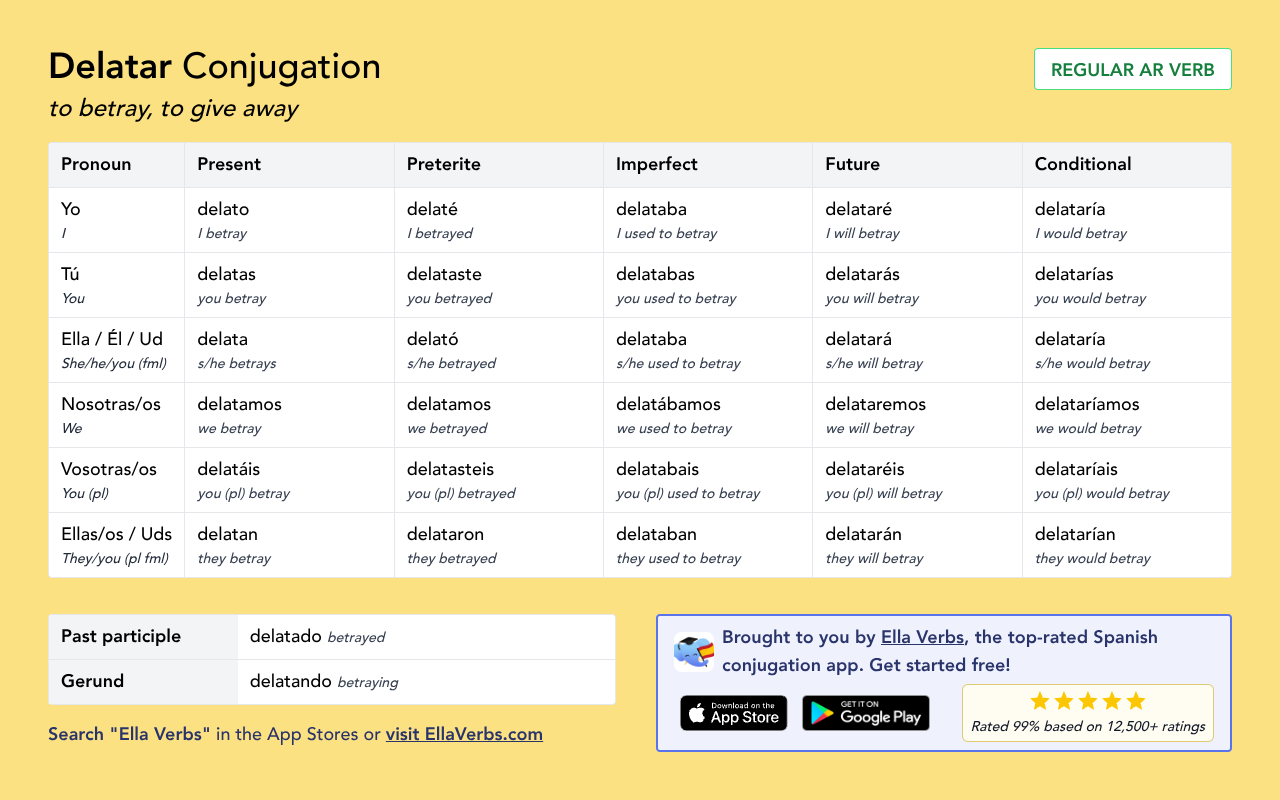
Download and print a cheat sheet of Delatar Spanish conjugation tables in image or PDF format:
Back to top
Practice Delatar conjugations (free mobile & web app)
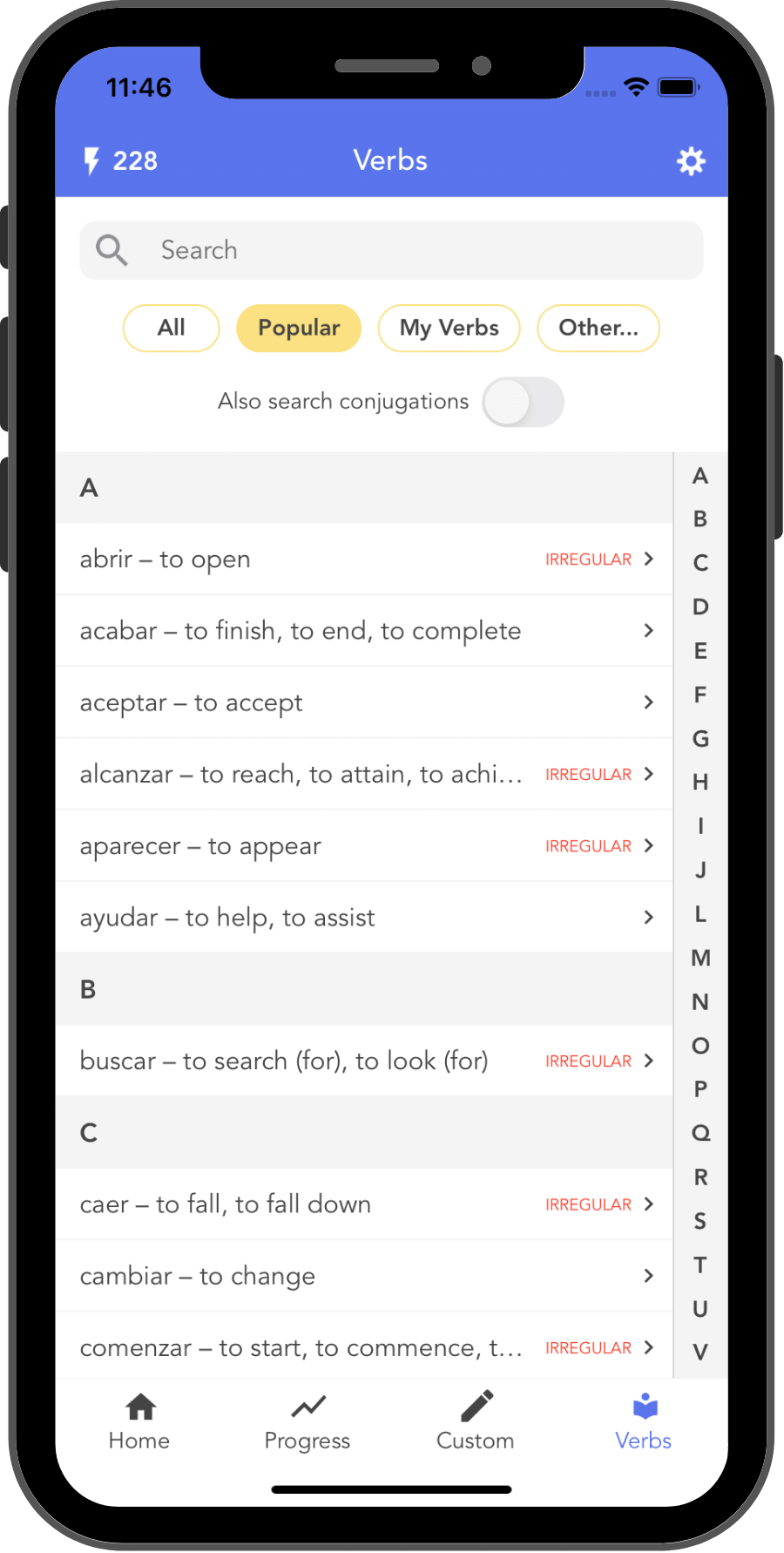
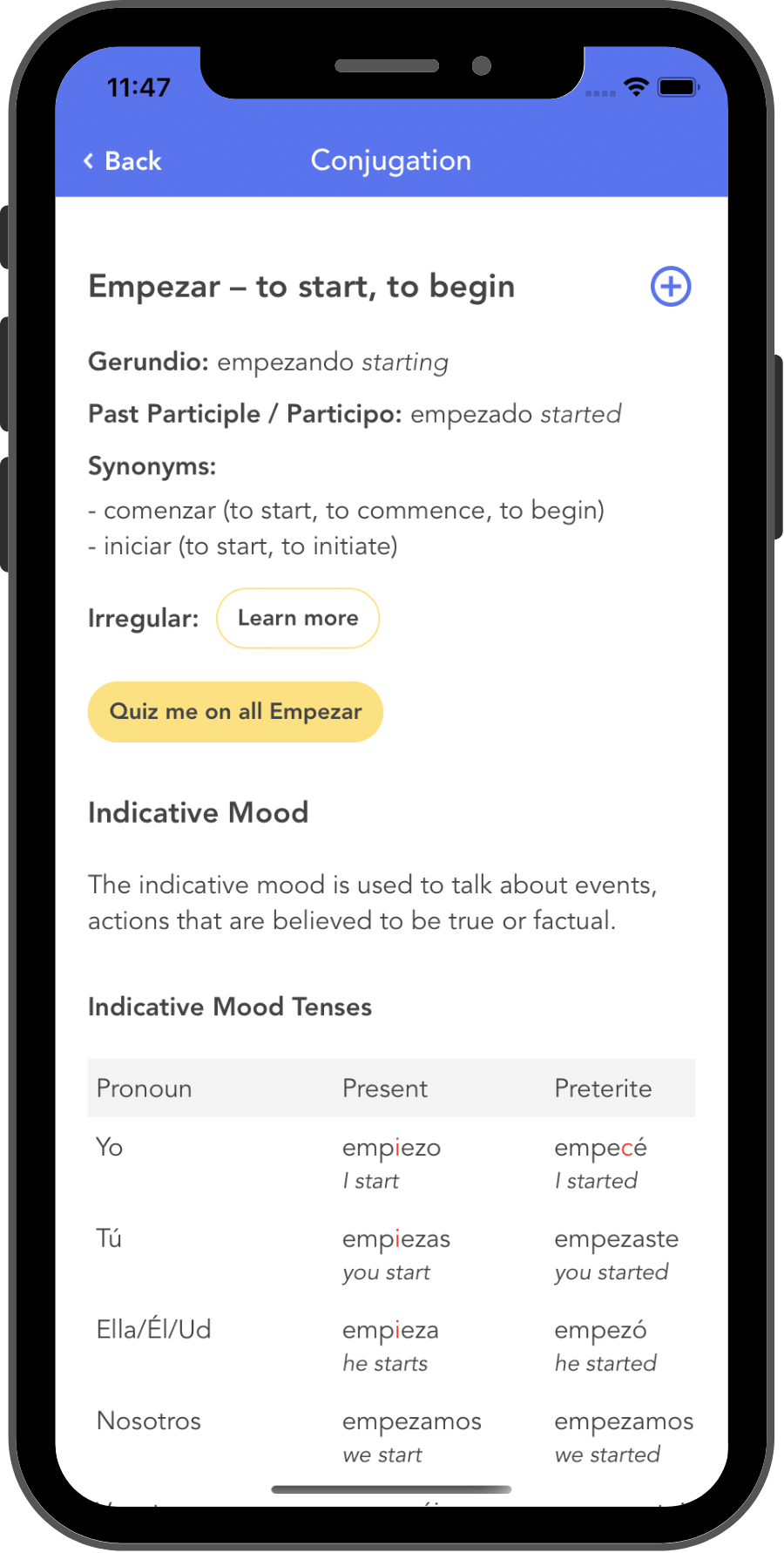
Get full conjugation tables for Delatar and 2,300+ other verbs on-the-go with Ella Verbs for iOS, Android, and web.
We also guide you through learning all Spanish tenses and test your knowledge with conjugation quizzes. Download it for free!
Back to top
About Ella Verbs
👋 Hola! We built Ella Verbs to help people (and ourselves!) master one of the hardest parts of Spanish – verb conjugation. It guides you through learning all tenses in an easy-to-follow way, giving you levels of bite-sized lessons and fun quizzes. Here is a 6 minute overview of all of the app's features:
It has changed a lot over the 9+ years we have been working on it, but the goal remains the same – to help you master Spanish conjugation! You can download and try it for free, and, if you do, please send any and all feedback our way!
- Jane & Brian
Back to top
Want to explore other verb conjugations?
Why not check out Deletrear – to spell out or see the complete list of verbs here.
Back to top
🇪🇸 New
Practice conjugation in a way that makes you think, not just memorize. Our Spanish Verb Sudoku has a new puzzle every day, plus free printable PDF worksheets with answer keys.
Play now